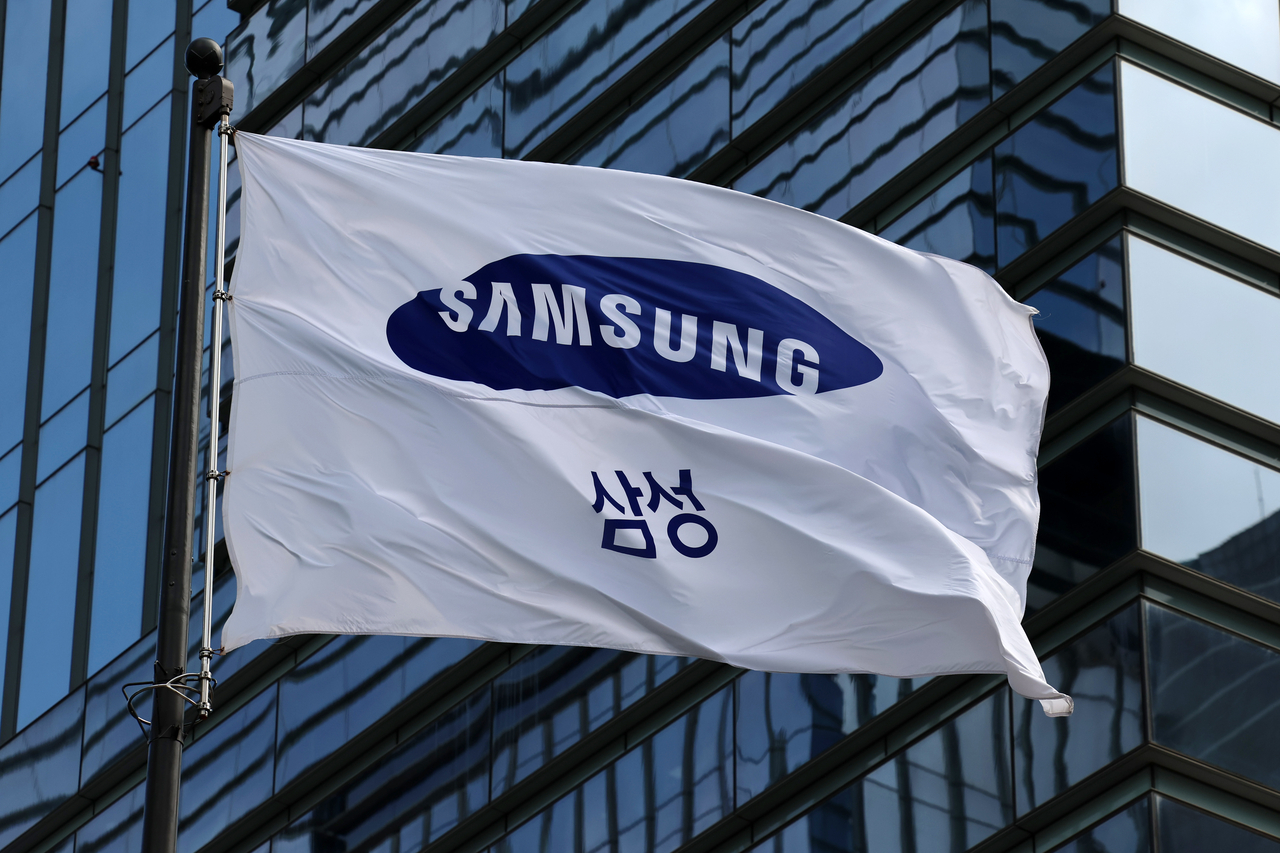
Samsung Electronics is poised to post quarterly operating profit above 100 trillion won ($74 billion) for the first time, with its DRAM margin seen topping 80 percent, even as memory price gains cool amid an AI-driven shift in production that is tightening supply across the broader memory market.
According to industry sources Sunday, estimates from DB Securities, Mirae Asset Securities and BNK Securities put Samsung’s third-quarter operating profit at an average 107.7 trillion won, up 20.3 percent from 89.4 trillion won in the second quarter.
Three brokerages expect the operating margin for Samsung’s Device Solutions division, which oversees its semiconductor business, to reach 72 to 75 percent, while its DRAM operating margin, encompassing both high-bandwidth memory and conventional products, could exceed 80 percent.
Market research firm TrendForce expects DRAM prices to rise 13 to 18 percent on-quarter in the third quarter, sharply slowing from an increase of about 60 percent in the previous quarter.
Analysts attribute the unusually strong margins to a shift in how memory-makers are allocating capacity. As Samsung and its rivals devote more advanced DRAM production to HBM and high-capacity server products, less capacity is available for conventional DRAM. Demand for server DDR5 is also rising alongside investment in AI data centers.
“In past memory upcycles, rising prices were followed by capacity expansion, which eventually brought prices back down,” said an industry source who asked not to be named. “This time, however, capacity is rapidly shifting toward HBM, so additional investment does not immediately lead to more conventional DRAM supply.”
Kim Dong-won, head of research at KB Securities, expects HBM to account for 40 percent of Samsung’s total DRAM capacity next year, up from 33 percent this year. The share of conventional DRAM is expected to fall to 59 percent from 65 percent.
Supply constraints are also extending delivery times. Kim said lead times for high-capacity server DDR5 have stretched to as long as 52 weeks this month, compared with around six weeks under normal market conditions.
“A structural shift is underway as the HBM-led reallocation of production capacity prolongs shortages of conventional DRAM and pushes prices higher,” Kim said.
yeeun@heraldcorp.com